
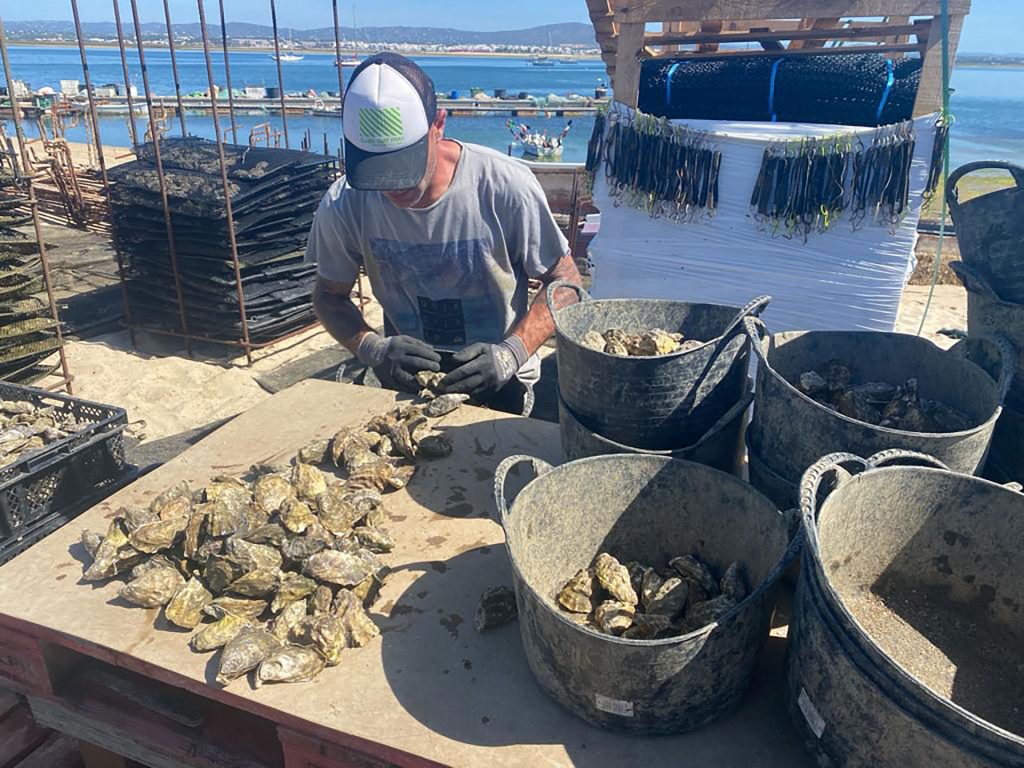
Why circularity matters in aquaculture
Aquaculture is one of the fastest-growing food production sectors worldwide and plays a crucial role in ensuring food security and reducing pressure on wild fish stocks. According to the Food and Agriculture Organization (FAO), aquaculture already provides more than half of all aquatic animals consumed globally and will continue to expand in the coming decades.
However, this growth brings important challenges. Fish farming requires water, feed and energy, and generates by-products and waste streams that need to be managed responsibly. As Europe seeks to achieve the objectives of the European Green Deal and the transition towards a sustainable blue economy, circularity has emerged as one of the most promising approaches for the future of aquaculture.
Rather than following the traditional linear model of “produce, use and discard”, circular aquaculture aims to maximise resource efficiency, minimise waste and transform side streams into valuable products. In this way, the sector can increase productivity while reducing its environmental footprint.
From waste to resources: the principles of circular aquaculture
Circular aquaculture is based on the idea that materials traditionally considered waste can become valuable resources for other processes. This approach contributes to reducing environmental impacts and creating new economic opportunities.
Several types of by-products are generated throughout the aquaculture value chain, including:
- Fish heads, bones, skins and viscera.
- Nutrient-rich sludge from production systems.
- Wastewater containing nitrogen and phosphorus.
- Shells from mollusc farming.
- Organic residues from processing facilities.
Instead of being discarded, these materials can be reused through different circular pathways.
Production of feed ingredients
One of the most established applications involves converting fish processing by-products into fishmeal, fish oil and protein hydrolysates. These ingredients can be incorporated into aquaculture feeds, reducing dependence on wild-caught fish resources and improving resource efficiency.
Research has shown that many European aquaculture by-products possess high nutritional value and can contribute significantly to feed production (Malcorps et al., 2021).
Fertilisers and nutrient recovery
Aquaculture sludge contains valuable nutrients such as nitrogen and phosphorus. These compounds can be recovered and transformed into biofertilisers or compost products for agricultural use.
Nutrient recycling represents an important strategy for reducing waste while contributing to more sustainable food systems. According to Campanati et al. (2022), nutrient recovery technologies can help close material loops and support the development of circular economies in aquaculture.
High-value bio-based products
Fish skins, bones and connective tissues are rich in collagen and gelatin, substances increasingly used in cosmetics, nutraceuticals and biomedical applications.
Recent studies have highlighted the growing potential of marine collagen derived from fish industry residues. Besides reducing waste, these applications create additional revenue streams and support the development of the blue bioeconomy (Rajabimashhadi et al., 2023).
New technologies supporting circular production
Technological innovation is accelerating the transition towards circular aquaculture.
Recirculating Aquaculture Systems (RAS) represent one of the most advanced examples. These systems continuously treat and reuse water, significantly reducing consumption compared with conventional production methods.
Modern RAS facilities combine:
- Mechanical and biological filtration.
- Real-time water quality monitoring.
- Energy-efficient technologies.
- Automated management systems.
Such innovations allow producers to optimise resources while maintaining high levels of fish welfare and production efficiency.
In parallel, digital technologies and precision aquaculture are providing new opportunities to improve feed management, reduce losses and monitor environmental parameters more effectively.
Europe’s commitment to a circular blue economy
The transition towards circular aquaculture is strongly supported by European policies and research initiatives.
The European Commission’s Blue Bioeconomy Roadmap identifies aquaculture as one of the sectors with the greatest potential to contribute to sustainable growth and resource efficiency. Similarly, the iFishIENCi project developed policy recommendations highlighting the importance of valorising aquaculture side streams and promoting circular business models.
These initiatives are aligned with broader European objectives, including:
- The European Green Deal.
- The Circular Economy Act.
- The Farm to Fork Strategy.
- The Sustainable Blue Economy Strategy.
Together, these policies aim to decouple economic growth from resource consumption and encourage more sustainable food production systems.
H2: Why people and skills are essential
Technology alone cannot guarantee the success of circular aquaculture.
Modern production systems are becoming increasingly complex and require professionals capable of understanding biological processes, resource management and sustainability principles. Operators need new competences to implement circular practices effectively and maximise the value of by-products.
This is precisely where education and training become essential.
The CIRCU-TECH project (Circular Competence Training for Aquaculture Waste Management using VR and AR Tools) addresses this challenge by developing innovative learning resources that support the acquisition of circular economy skills in aquaculture.
Through digital learning environments and immersive technologies such as Virtual Reality (VR) and Augmented Reality (AR), the project aims to make complex concepts easier to understand and more accessible for students, technicians and professionals.
By improving knowledge and promoting best practices, CIRCU-TECH contributes to strengthening the human dimension of the circular transition.
Building a more sustainable future
Circular aquaculture demonstrates that sustainability and productivity can go hand in hand.
By transforming waste into valuable resources, improving resource efficiency and embracing innovative technologies, the sector can reduce its environmental impact while creating new economic opportunities.
Yet the transition towards circularity depends not only on technological solutions. It also requires knowledge, collaboration and continuous learning.
Projects such as CIRCU-TECH play an important role in this process by helping to equip current and future professionals with the skills needed to drive change. Because ultimately, building a sustainable blue economy means ensuring that both technologies and people evolve together.
References
Food and Agriculture Organization (FAO). (2024). The State of World Fisheries and Aquaculture 2024: Blue Transformation in Action. Rome: FAO. fao.org/publications/fao-flagship-publications/the-state-of-world-fisheries-and-aquaculture
Malcorps, W., Newton, R. W., Sprague, M., Glencross, B. D., & Little, D. C. (2021). Nutritional Characterisation of European Aquaculture Processing By-Products to Facilitate Strategic Utilisation. Frontiers in Sustainable Food Systems, 5, 720595. doi.org/10.3389/fsufs.2021.720595
Campanati, C., Willer, D., Schubert, J., & Aldridge, D. C. (2022). Sustainable Intensification of Aquaculture through Nutrient Recycling and Circular Economies: More Fish, Less Waste, Blue Growth. Reviews in Fisheries Science & Aquaculture, 30(2), 143–169. doi.org/10.1080/23308249.2021.1897520
Rajabimashhadi, Z., Gallo, N., Salvatore, L., & Lionetto, F. (2023). Collagen Derived from Fish Industry Waste: Progresses and Challenges. Polymers, 15(3), 544. doi.org/10.3390/polym15030544
European Commission, Technopolis Group and Wageningen Research. (2020). Blue Bioeconomy Forum – Roadmap for the Blue Bioeconomy. Publications Office of the European Union. op.europa.eu/en/publication-detail/-/publication/7e963ebb-46fc-11ea-b81b-01aa75ed71a1/language-en