
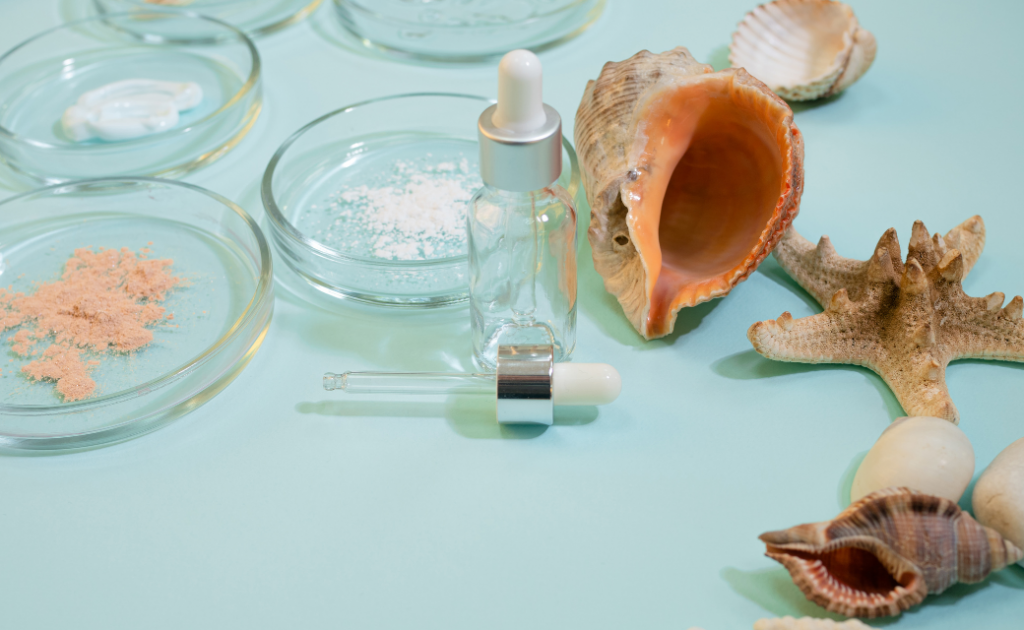
In several European countries, aquaculture by-products are valorised by being used in the marine collagen industry, circular feeds, and aquaculture-based fertilizers.
In Norway and Iceland, large companies involved in salmon and cod production utilise heads, bones, skins, and trimming residues to produce high-purity marine collagen and gelatin, used in dietary supplements, cosmetics, and biomedical applications, while the remaining material is processed into meal and oil for aquaculture feed and pet food. In Scotland and Denmark, salmon processing industries, among others, supply by-products to feed manufacturers that formulate circular diets, replacing part of the plant protein and wild-caught fish oil with hydrolysates, meals, and oils derived from these side streams. In Spain, especially in Galicia and the Mediterranean, aquaculture fish processing companies work with R&D centres to convert filleting residues into functional ingredients and, in parallel, valorise sludge and process water in the production of liquid fertilizers and organic composts for agriculture. [1, 2, 3]
Portugal is also committed to the circular economy. The valorisation of aquaculture by-products is beginning to materialise in very concrete projects that transform fish residues, effluents, and low-trophic-level organisms into new products and value-added services. For instance, the brand “Bake My Dog Happy”, created by NaturMaris, offers an innovative product that uses by-products from the canning industry in sustainable pet supplements based on marine collagen, helping to promote joint, skin, and coat health in animals, while preventing waste and supporting the circular economy.
These are just a few examples of how aquaculture can foster the circular transition in Europe.
Unfortunately, the use of aquaculture by-products remains largely invisible to the general public, who rarely associate fish fillets, feeds or marine cosmetics with the use of heads, bones, viscera or processing water. Even so, there are already companies in Europe and around the world transforming these by-products into feed, collagen, fertilizers, nutraceuticals and bioplastics, aligning themselves with European zero-waste policies and the blue bioeconomy. [1, 2, 4,5]
However, despite the strong European political drive towards a blue circular economy, most consumers continue to associate “fish waste” only with plastics or overfishing, and do not realise that more than half of the biomass can be reused as a high-value ingredient. Studies and reports indicate that the topic of by-product valorisation is mainly known among decision-makers, industry and scientific communities, while remaining almost invisible in communication aimed at the final consumer. [1, 2, 3]
This creates a clear opportunity for brands that want to differentiate themselves with transparent circularity narratives, from ‘head-to-tail’ to ‘zero waste aquaculture’. [1]
European framework and official documents
At the European level, several official documents frame the valorisation of by-products as part of the circular economy and the blue bioeconomy, including policy recommendations that support converting aquatic waste into new products and services. Documents such as “Policy Recommendations for a More Circular Aquaculture”, developed under the iFishIENCi project and aligned with the European Green Deal, and the “Roadmap for the Blue Bioeconomy” published by the Blue Bioeconomy Forum with support from the European Commission, highlight aquaculture as having particular potential within the circular economy. This is because it generates relatively clean and homogeneous by-product streams (such as heads, bones, skins, viscera, sludge and wastewater), which are easier to standardise for food ingredients, feeds, fertilisers or biomedical applications. [1, 2, 6]
What by-products does aquaculture generate?
Aquaculture farms and processing units produce several types of by-products: non-edible parts of fish (heads, bones, skins, viscera), sludge and solids from culture waters, and shells in bivalve production. These by-products can represent a significant share of the total biomass produced and, if properly utilised, they allow an increase in the usable yield of production without increasing pressure on natural resources. [7, 8]
In addition to visible biomass, aquaculture also generates nutrient-rich wastewater (nitrogen, phosphorus, organic matter) which, instead of being viewed solely as effluents to be treated, can become raw material for microalgae, biofertilisers, or other biotechnological processes. In bivalve production, shells are a bulky but valuable by-product, with potential for soil pH correction, mineral supplements, and construction materials, among other applications. [7, 8]
How do these by-products enter the circular economy?
In simplified terms, instead of discarding what does not go to the plate, these products are converted into inputs for another production chain, closing nutrient cycles and adding economic value. In the specific case of aquaculture, the by-products of this industry contribute to three main circular routes: feed, agriculture/soil, and bioindustry. [8, 9]
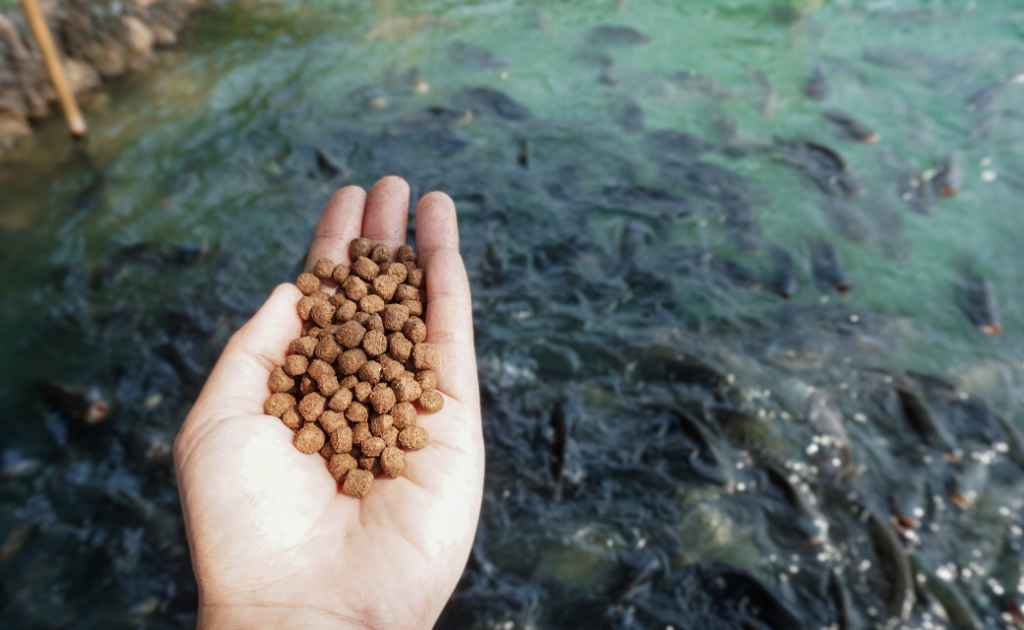
For food applications, parts such as heads, skins, and viscera can be processed into meal and oil for aquaculture feed, pet food, or, after proper processing, into ingredients for human consumption, such as collagen, gelatin, or protein hydrolysates. In agriculture, sludge and protein residues are used to produce liquid and organic fertilizers, while shells are used as acidity correctives, calcium sources, or substrates for reef restoration. [7, 8, 9]
How does the CIRCU-TECH project impact this topic?
Unfortunately, these technological and regulatory advances have not been matched by public awareness: many consumers still do not know that skins, bones, sludge, and other side streams can give rise to other products of significant value. Increasing literacy and social acceptance is therefore as important as investing in new solutions, because without public trust and understanding, circularity in aquaculture remains invisible.
European projects focused on circularity and innovation, such as CIRCU-TECH Project, are strategic tools to bridge this gap by connecting research, industry, and communication, generating practical examples, and translating technical language into clear narratives for society. By disseminating good practices, case studies, and opportunities for by-product valorisation, initiatives of this type help to reinforce the idea that circular aquaculture is not only technically feasible but also socially desirable.
References
[1] Balsells, S., Bardócz, T., Chary, K., Checa Alias, D., Enyedi, E., Hávardsson, B., Kane, F., Kause, A., Kleinegris, D., Lengyel, P., Mihalffy, S., O’Brien, D., Ravagnan, E., Rodríguez, L., Sanchez, I., Shrestha, M., & Dankel, D. J. (2022). Policy Recommendations for a More Circular Aquaculture. iFishIENCi, Horizon 2020 project. ifishienci.eu/wp-content/uploads/2022/03/IfishcIENCi_Policydoc_Jan-2022Final.pdf
[2] Masi, M., Adinolfi, F., Marrocco, E. S., & Vecchio, Y. (2025). A circular transition model for the European aquaculture sector. Aquaculture, 596, 741819. doi.org/10.1016/j.aquaculture.2024.11819
[3] AAC, MAC, NSAC, & CCRUP. (2024). Joint-AC advice on valorisation of fisheries and aquaculture by-products. European Fisheries and Aquaculture Advisory Councils. Retrieved from effop.org/wp-content/uploads/2024/09/9.-AAC-MAC-NSAC-CCRUP-Joint-AC-Advice-on-valorisation-of-fisheries-and-aquaculture-by-products.pdf
[4] Rajabimashhadi, Z., Gallo, N., Salvatore, L., & Lionetto, F. (2023). Collagen derived from fish industry waste: Progresses and challenges. Polymers, 15(3), 544. doi.org/10.3390/polym15030544
[5] Jimenez-Champi, D., Romero-Orejon, F. L., Muñoz, A. M., & Ramos-Escudero, F. (2024).The revalorization of fishery by-products: Types, bioactive compounds, and food applications. International Journal of Food Science, 2024, 6624083. doi.org/10.1155/2024/6624083
[6] European Commission: Executive Agency for Small and Medium-sized Enterprises, Technopolis Group and Wageningen Research (2020). Blue Bioeconomy Forum – Roadmap for the blue bioeconomy. Publications Office, 2020. data.europa.eu/doi/10.2826/605949
[7] Campanati, C., Willer, D., Schubert, J., & Aldridge, D. C. (2022). Sustainable Intensification of Aquaculture through Nutrient Recycling and Circular Economies: More Fish, Less Waste, Blue Growth. Reviews in Fisheries Science & Aquaculture, 30(2), 143–169. doi.org/10.1080/23308249.2021.1897520
[8] Malcorps, W., Newton, R. W., Sprague, M., Glencross, B. D., & Little, D. C. (2021). Nutritional characterisation of European aquaculture processing by-products to facilitate strategic utilisation. Frontiers in Sustainable Food Systems, 5, 720595. doi.org/10.3389/fsufs.2021.720595
[9] Cooney, R., Baptista de Sousa, D., Fernández-Ríos, A., Mellett, S., Rowan, N., Morse, A. P., Hayes, M., Laso, J., Regueiro, L., Wan, A. H. L., & Clifford, E. (2023). A circular economy framework for seafood waste valorisation to meet challenges and opportunities for intensive production and sustainability. Journal of Cleaner Production, 392, 136283. doi.org/10.1016/j.jclepro.2023.136283